
热水器:水垢、阳极棒和漏水前兆Water Heater: Scale, Anode Rod & Leak Warning Signs
家用储水式热水器一般能用 8 到 12 年,但多数人从来不保养,直到某天早上没热水、或者地下室一地水才想起它。一年花半小时做两件事,能多用好几年。A household tank water heater typically lasts 8 to 12 years, yet most people never maintain it — until one morning there is no hot water, or the basement floor is flooded. Two jobs a year, half an hour each, can add years to its life.
先看年份:你的热水器几岁了First, Check Its Age
- 看铭牌:热水器侧面贴着铭牌,上面有生产日期或序列号,大多数品牌能从序列号的前几位读出年份。买房时交接文件里也常有安装年份。Read the label: the rating plate on the side shows the manufacture date or a serial number — most brands encode the year in its first digits. The installation year is often in the home-purchase documents too.
- 8 年是个坎:超过 8 年的热水器,内胆生锈、底部渗水的风险明显上升。不是说一到 8 年就得换,但要开始留意下面说的几个前兆,并且别再拖保养。Eight years is the turning point: past 8 years, the risk of tank rust and bottom leaks rises noticeably. It doesn't mean replace it at 8, but start watching for the warning signs below and stop skipping maintenance.
- 检查保险:有的房屋保险对老热水器有要求,漏水造成的损失也可能和热水器年龄挂钩。换新之前先问一句保险经纪,不花钱。Check your insurance: some home insurance policies have conditions on old water heaters, and water-damage claims can depend on the unit's age. Ask your broker before replacing — it costs nothing.
每年排一次水垢Flush Out Sediment Once a Year
- 为什么:自来水里的矿物质沉淀在罐底,越积越厚。加热时水垢会发出隆隆声、热水越来越少、电费(或燃气费)悄悄上涨,严重时还会烧坏加热元件。Why: minerals in tap water settle at the bottom of the tank and build up. Scale causes rumbling when heating, less hot water, and quietly higher hydro or gas bills — and can eventually burn out the heating element.
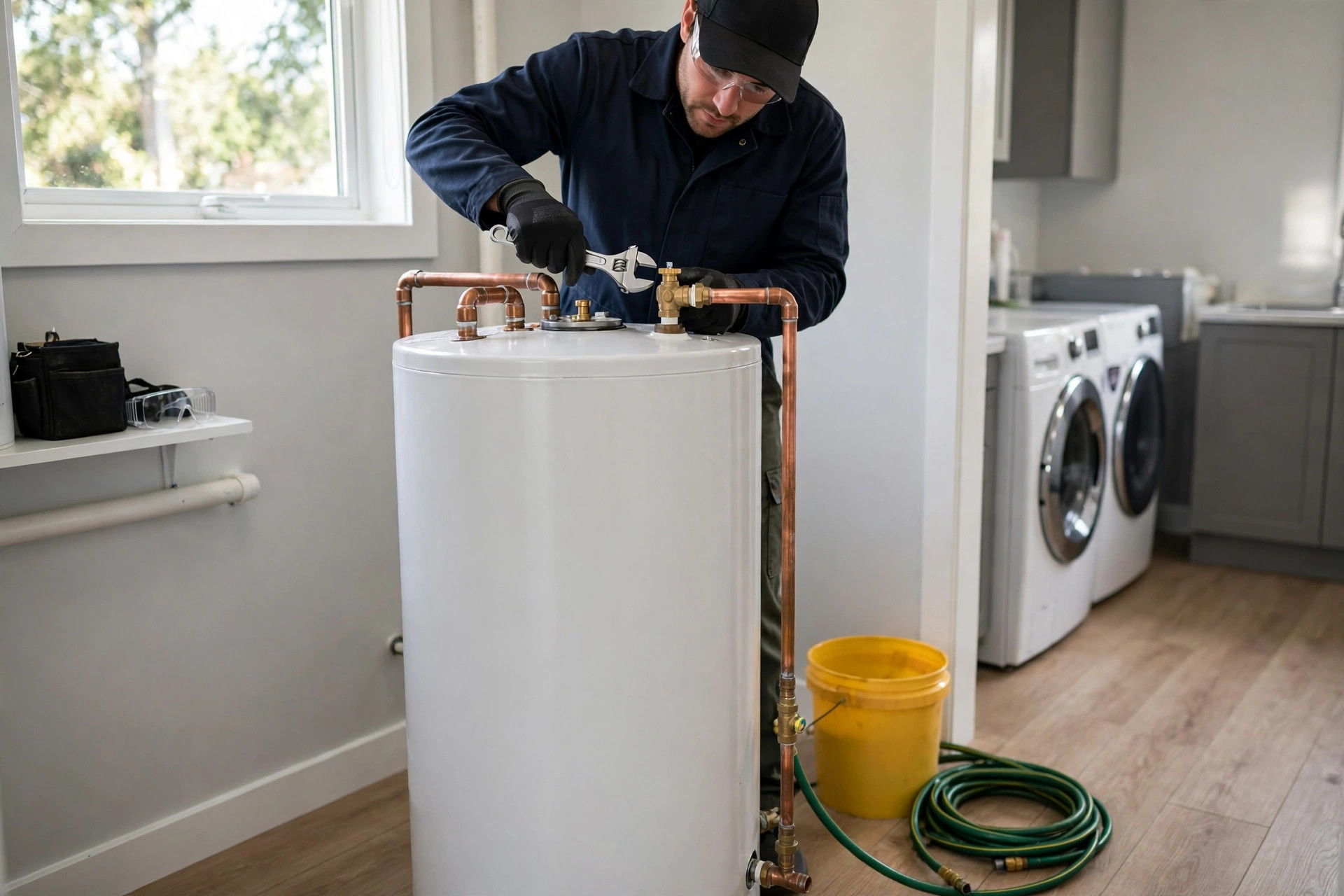
- 怎么做:先断电(电热水器关断路器)或把燃气热水器调到 pilot 档;关进水阀;接一根水管到罐底的排水阀,另一头通到地漏或室外;打开热水龙头放气,然后开排水阀放水,直到流出的水变清。整个过程约半小时。How: switch the power off at the breaker (electric) or set a gas unit to pilot; shut the cold-water inlet valve; attach a hose to the drain valve at the bottom, run it to a floor drain or outside; open a hot tap to let air in, then open the drain valve until the water runs clear. About half an hour in total.
- 注意安全:排出的水很烫,别直接用手试。排水阀多年没动过可能拧不动或关不严——拧之前先确认附近有水桶和毛巾,万一阀门漏水能马上接住,修不好就叫师傅。Safety first: the water coming out is scalding — don't test it by hand. A drain valve untouched for years may be stiff or fail to seal again, so keep a bucket and towels nearby before you start, and call a technician if it won't close properly.
阳极棒:热水器里最容易被忽略的零件The Anode Rod: The Most Overlooked Part Inside
热水器顶部有一根镁棒或铝棒,叫阳极棒(anode rod)。它的作用是“替死”——水里的腐蚀先吃掉它,而不是吃掉钢制内胆。一根阳极棒一般 3 到 5 年就消耗得差不多了,耗尽之后,内胆就开始生锈,离漏水也就不远了。At the top of the tank sits a magnesium or aluminum rod called the anode rod. Its job is to sacrifice itself — corrosion in the water eats the rod instead of the steel tank. A rod usually lasts 3 to 5 years; once it is gone, the tank itself starts rusting, and a leak is not far behind.
- 怎么检查:断电断水后,把阳极棒从顶部拧出来看看。如果棒身只剩一根细铁丝、或者表面坑坑洼洼,就该换了。温哥华水质偏软,阳极棒消耗相对慢一些,但一样要查。How to check: with power and water off, unscrew the rod from the top and look at it. If only a thin wire is left, or the surface is heavily pitted, replace it. Vancouver's water is relatively soft, so rods last a bit longer here — but they still need checking.
- 热水有臭鸡蛋味:这常常是阳极棒和水里的细菌反应产生硫化氢。换一根铝锌合金阳极棒通常能解决;如果味道一直不散,也可能是水质问题,要另外查。Rotten-egg smell in hot water: this is often the anode rod reacting with bacteria in the water to produce hydrogen sulfide. Switching to an aluminum-zinc alloy rod usually fixes it; if the smell persists, the water itself may need checking.
漏水前兆:这四种情况别拖Leak Warning Signs: Don't Put These Off
- 底部或接头处渗水:罐底周围有水渍、水锈,或者进出水管接头处滴水。接头漏水多半是密封件老化,能修;罐体本身漏水基本没法修,只能换。Water at the base or joints: dampness or rust stains around the bottom, or drips at the inlet/outlet connections. A leaking joint is usually a worn seal and can be fixed; a leaking tank itself almost always means replacement.
- 热水变黄、变浑:只在热水龙头出黄水、冷水正常,说明内胆已经生锈。这时候热水器随时可能漏,尽快安排更换,别等它在半夜破掉。Yellow or cloudy hot water: rusty water from hot taps only, while cold water runs clear, means the tank is corroding inside. It can fail at any time — arrange a replacement soon rather than waiting for it to burst overnight.
- 加热时隆隆响、水温忽冷忽热:多半是水垢太厚,也可能是加热元件或温控器出问题。先排一次水垢试试,没改善就找人检查。Rumbling while heating, or water temperature that swings hot and cold: usually heavy sediment, but it can also be a failing element or thermostat. Flush the tank first; if it doesn't help, have it inspected.
- 安全阀(T&P 阀)一直滴水:罐体侧面或顶部的泄压阀偶尔滴几滴是正常的,但一直滴、或者大量出水,说明水压过高或阀门坏了。别用塞子堵住它——这是防爆的安全装置,堵住非常危险。The relief (T&P) valve keeps dripping: an occasional drip is normal, but a constant drip or heavy flow means excess pressure or a failed valve. Never plug it — it is a safety device that prevents the tank from over-pressurising, and blocking it is dangerous.
温度设多少合适What Temperature to Set
一般建议把热水器设在 49°C(120°F)左右:够热、够用,又不容易烫伤小孩和老人,还能省一点电费。设得太高不仅浪费能源,水垢也长得更快。如果家里有免疫力较弱的成员、或者长期不住人,温度设置可以先问问师傅或医生再定。A setting around 49°C (120°F) is generally recommended: hot enough for household use, less likely to scald children or seniors, and a little cheaper to run. Setting it higher wastes energy and speeds up scale build-up. If someone in the home is immunocompromised, or the house sits empty for long periods, ask a technician or doctor about the right setting first.
漏水了?先关水,再打电话Leaking? Shut the Water Off, Then Call
爱家冷暖 24 小时紧急维修,水管漏水是日常活。打电话说清漏水位置和现象,师傅能先判断要不要马上上门,紧急情况优先处理。Ai Jia Nuan offers 24-hour emergency service — pipe leaks are everyday work. Call with the leak location and symptoms; the technician can judge whether an immediate visit is needed, with emergencies prioritised.
微信:PE-2009 · 更多服务见 WeChat: PE-2009 · More services at pe2009.com